Several years ago, I did a few blog posts titled “Global Terror Alerts”, and they focused on horror gems from all over the world. Out of all the international frights I’ve viewed, this may be the first Pakistani production for me.
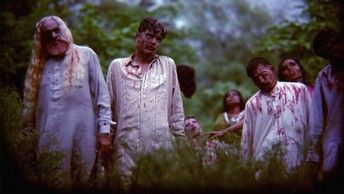
Omar Ali Khan’s Zibahkhana (Hell’s Ground) is a low budget darling that you can tell was made by a fan of genre. Full of tried-and-true tropes, that aren’t too many surprises in how the story plays out. But this one still held my attention and interest through its 77-minute runtime because of the love for horror you can clearly feel while watching.
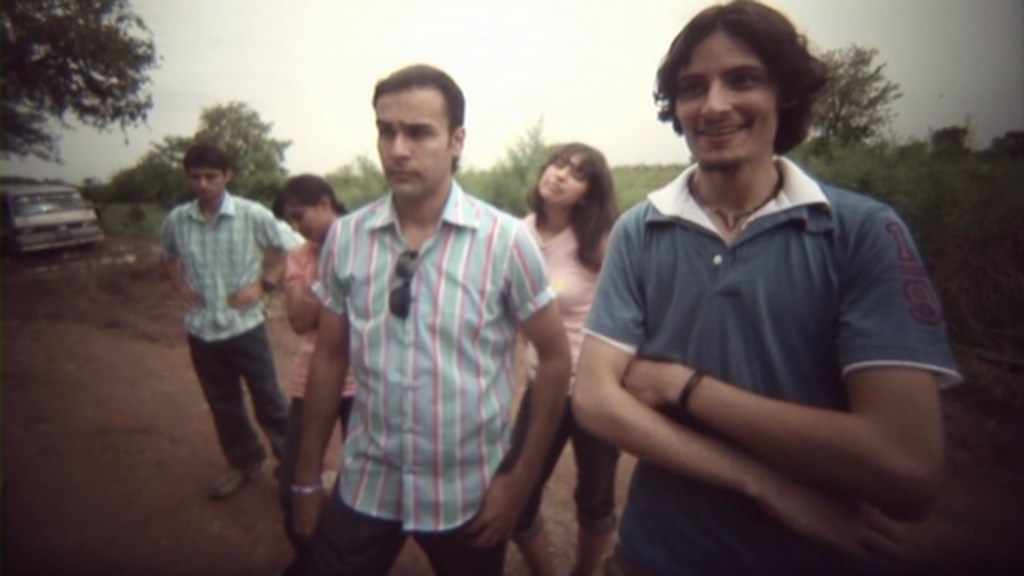
In Zibahkhana (which translates to “slaughterhouse”), a group of five teenage friends secretly take a road trip to go to a rock concert. This quintet is composed of Vicky (the hunk and driver of the van), Roxy (the spoiled party girl), OJ (the horror fan pothead), Simon (the poor kid on a scholarship), and the prim and shy Ash. Before we even meet the core cast, the film opens with a man on a remote road wrecking his car after swerving to miss someone standing in the road. Well, in the effort to quickly establish there is a crazed killer in the surrounding woods, the poor driver doesn’t even make it past the 4-minute mark!
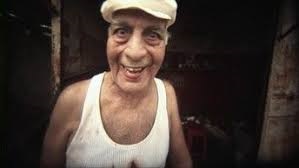
Once the teens get on the road, some of the transition scenes are reminiscent of Creepshow and the EC Comics of old as they use illustrated frames with captions. And you can’t have a horror film road trip without a harbinger, right? The “speaker of doom” in this is the owner of a roadside chai stand. In a bit of meta, the actor Rehan did essentially play Dracula in the 1967 film The Living Corpse (Zinda Laash) that OJ recognizes him from.
As this hodgepodge of homages and influences blends even further, we have a plot line of environmental horror as pollution in the water is turning some villagers into flesh eating monsters. But we also have your old fashion “cannibal family” plot in this mix as burka-wearing killer comes off as a mix of Leatherface and Friday The 13th Part II’s “baghead” Jason. The burka flowing like a ghost sheet at times gives its own creep factor as well.
Yet again, this is a film I would never have even known of if not for Rue Morgue’s 200 Alternative Horror Films You Need To See list. With about 25 films left on there for me to watch, who knows what will show up in this blog series next? Until then, have some fun, grab some friends, and check out this one. Embrace it for what it is, and I doubt you will be disappointed.
(Hell’s Ground is available for VOD on Amazon Prime.)
When one stumbles across a film with a title like “Plank Face,” you do have to take pause and satisfy at least your cursory curiosity for such an oddity. And then, if you are like me, you go beyond the cursory and do a full viewing of this twisted tale of a feral family in the forest.
Scott Schirmer’s Plank Face(2016) stars Nathan Barrett as Max, a recently released con who goes on a hiking trip with his girlfriend, Stacey. After first being set upon by a random rapist at their campsite, Max is waylaid by another unseen attacker after saving Stacey.
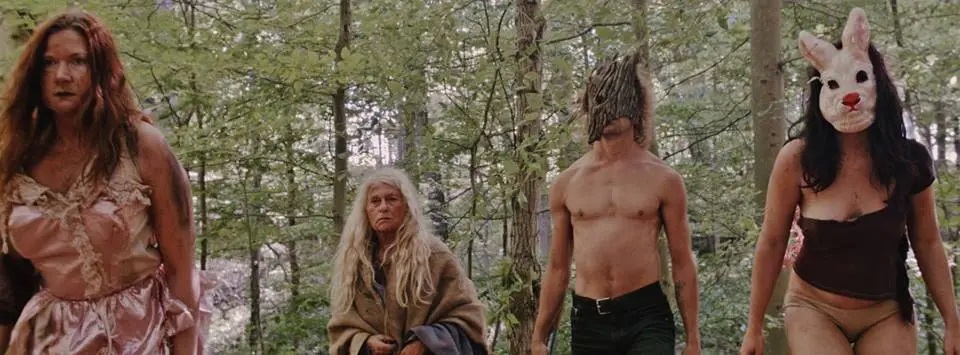
Max wakes to find he has been taken by a trio of women, credited as Granny, The Bride, and Bunny Girl. On his death bed in the same cabin is Old Daddy, who we see get mortally wounded in the opening five minutes of the film. Torture and forced cannibalism follow, and a whole lot of nudity, male and female, starts happening, too. It’s late into this write up to say it, but if you are triggered by sexual assault, definitely steer away from this film as there are multiple rape scenes with both the women and Max being the aggressor. The story plays out with minimal dialogue (apart from the made-up language used by Granny) as Max takes up the mantle of Plank Face from the recently departed Old Daddy and steadily sheds his civilized nature with the family.
As a caveat, I must ask you to not judge this film by the first 15 minutes if you choose to watch it. The overall quality of the performances and the look of it greatly improves after Max wakes in the cabin. I was frequently impressed by the lighting in comparison to other films of this budget range. And once standard English is dropped, the chance for stilted dialogue is eliminated for the benefit of several of the cast members.
I was slightly surprised to find that I kind of liked this film. It’s not great, and Max goes feral a little too easily. But that might be a reflection on his time in prison. Hard to say. This is not a film for everyone by any means, but if you want to wander down a different path, give this a watch. Consider it a ballsy move. (Plank Face is currently streaming on Tubi.)
In this round of Desert Island Picks, we punch the clock and pick a pack of work related horror films to be stranded with. And we even avoided overtime!








 The Podcast Macabre